If you ask five wholesale buyers what they prioritize when sourcing New Balance, you'll get five different answers. One dealer says "spec conformity." One bulk shoe care buyer says "packaging integrity." One private-label operator says "mold and outsole testing." They're all right. They're just doing different scenarios.
I've been a quality/brand compliance manager at a footwear distribution company for four years. Roughly 2,000 SKUs a year, everything from New Balance running shoes to shoe care kits. About 8% of first deliveries get rejected for one reason or another. Enough that I've stopped believing in a single sourcing checklist.
Here are the three scenarios I actually separate wholesale orders into:
- Scenario A — Core dealer replenishment: running shoes, basketball shoes
- Scenario B — Bulk shoe care: polish, cleaners, insoles
- Scenario C — Private-label / OEM soccer cleats
There's no universal guide. But each scenario has a different failure mode — and a different checklist that actually prevents it.
Scenario A: Core Dealer Replenishment
This is the scenario most dealers know. You're filling shelf space with New Balance running shoes (460 v4, 520 v9, 740) and basketball shoes.
What to watch for: specification conformity. That means size standards, colorway, insoles, laces, shoe box labeling, and carton pack count. A decent running shoes specification guide puts all of this on paper — and this is the one scenario where you actually need it in hand before the PO goes out.
In 2022 we rejected a 760-pair batch. Carton after carton of New Balance running shoes, mixed models — 460 v4, 520 v9, and FuelCell Rebel v4. Boxes were labeled US 10. But when we measured each pair, roughly 6% ran nearly half a size large. Normal deviation is around ±3mm in US sizing. This ran outside it. The vendor claimed it was "within industry standard." That's an old red flag for me. We rejected the batch. They redid it at their cost. Now every contract includes a size deviation clause.
What that incident taught us: spec consistency beats price difference. A supplier who's 15% cheaper but runs half a size off will cost you more in returns, customer complaints, and shelf appearance.
Extra check: FTC country-of-origin labeling. Under FTC regulations (19 CFR 134), imported footwear has to be marked with the country of origin clearly and legibly — either on the product or on the packaging, in a way a buyer can actually read. We have a standing check on about 6 cartons per batch that get pulled for missing or buried labels. Learned to check it before customs did, not after.
What actually happened: We didn't have a formal receiving-inspection protocol. It cost us when we got a batch with 90+ pairs in the wrong colorway mixed in. Now I run what I call an "unboxing check" — 10 pairs per carton, cross-checked against the size sheet and colorway code. Takes 20 minutes. Saved me three separate headaches.
Scenario B: Bulk Shoe Care
Shoe care is a different animal. You're buying by the case, not by the size run. The problems are different: packaging integrity, labeling, seals, and liquid/aerosol transit.
I went back and forth between two bulk shoe care suppliers for two weeks. The established supplier offered fewer pieces per case but used sturdy retail-ready chipboard boxes. The new supplier offered four more pieces per case and 12% lower cost, but used thinner chipboard. On paper, the new deal looked like a no-brainer. But our retail accounts were blunt: crushed boxes don't sell.
I chose the established supplier. Three months later, the new one lost an entire lot when aerosols leaked and blew out the cartons. I still second-guessed the choice for a while — what if I'd left money on the table? Didn't relax until our next 12 accounts reordered without a single packaging complaint.
Here's the counterintuitive part: packaging integrity outweighs unit cost. Shoe care sits on a retail shelf. A dented box, a crooked label, a leaking seal — the customer assumes the brand is slipping. The polish inside could be identical to the good box next to it. It doesn't matter.
In my opinion, shoe care is the single most fragile brand touchpoint in the New Balance lineup. People buy care products as a trust purchase. If a bottle of polish shows up with a soft box, they start wondering if the running shoes will too.
Scenario C: Private-Label / OEM Soccer Cleats
This is the most technical scenario. Here you're literally doing manufacturing — or contracting for it. This is where a soccer cleats manufacturer relationship either holds up or falls apart.
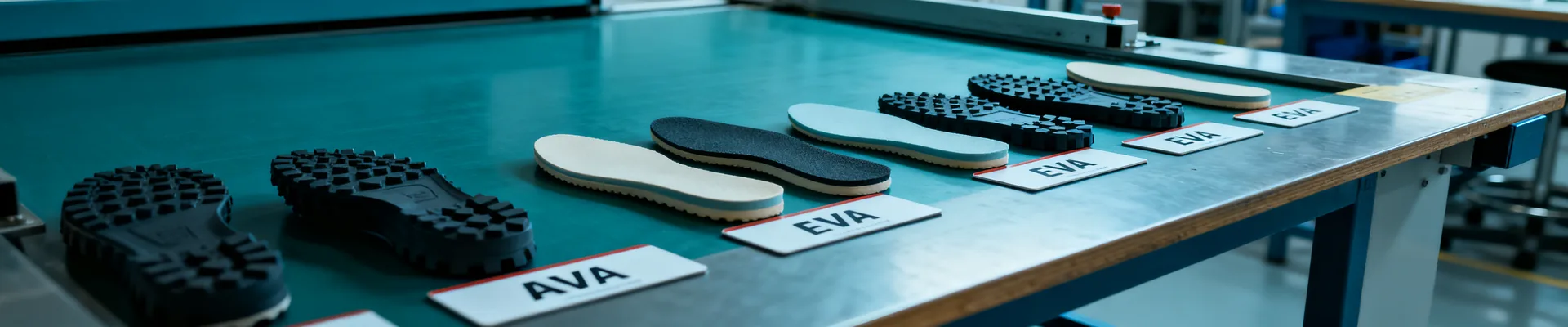
What to watch for: outsole hardness, stud length, upper material, tooling cost, minimum order quantity, and testing standards.
I still kick myself over one supplier who verbally promised Shore A 65 outsole hardness over the phone. Didn't put it in writing. The first production lot measured Shore A 58 — too soft for firm ground. 5,000 pairs. We argued for a week over "an outsole is an outsole." We ended up eating $14,000 in rework and a delayed launch.
Learned it the hard way: nothing goes into production without a written spec sheet and a signed batch report. SATRA footwear testing standards are commonly used as a benchmark for outsole hardness, slip resistance, and upper durability — but different stud types can have their own surface-specific requirements. You have to ask for them explicitly.
The counterintuitive part here: private-label cleat buyers usually start with MOQ. Honestly, that might be the wrong starting point. At an 800-pair MOQ you save 40% on tooling — but if you strip testing budget to hit that number, you're practically building a soft-outsole shoe that comes back in returns. MOQ is negotiable. Testing budget is where I'd be stubborn. A bad private-label shoe costs more than a thousand unsold good ones.
How to Figure Out Which Scenario You're In
Here's the quick check:
Question 1: Are you restocking or building a new shelf?
- Restocking — Scenario A. Your risk is spec drift and size run gaps.
- Building new — Scenario B. Your risk is packaging integrity and shelf readiness.
Question 2: Are you selling it as a standalone category, or as an add-on to shoes?
- Standalone — Scenario B. Treat it as a brand touchpoint equal in weight to the shoes.
- Add-on — Scenario A. Bundle it with footwear inventory, but keep the same packaging expectations.
Question 3: Can you absorb a bad batch?
- No — Scenario C. Get written specs, batch reports, and testing standards.
- Yes, and you can move it fast — Scenario A. But keep watching the size runs.
Bottom line: I started rebuilding our incoming inspection manual back in 2021. Today each scenario has its own checklist — size sheets and carton checks on A, packaging integrity on B, batch records and hardness tests on C. It costs me about 30 minutes per order. It's saved me a ton of grief.
The biggest mistake I see is using the same checklist for every order. That's also how you end up rejecting cartons that were actually fine.

Leave a Reply